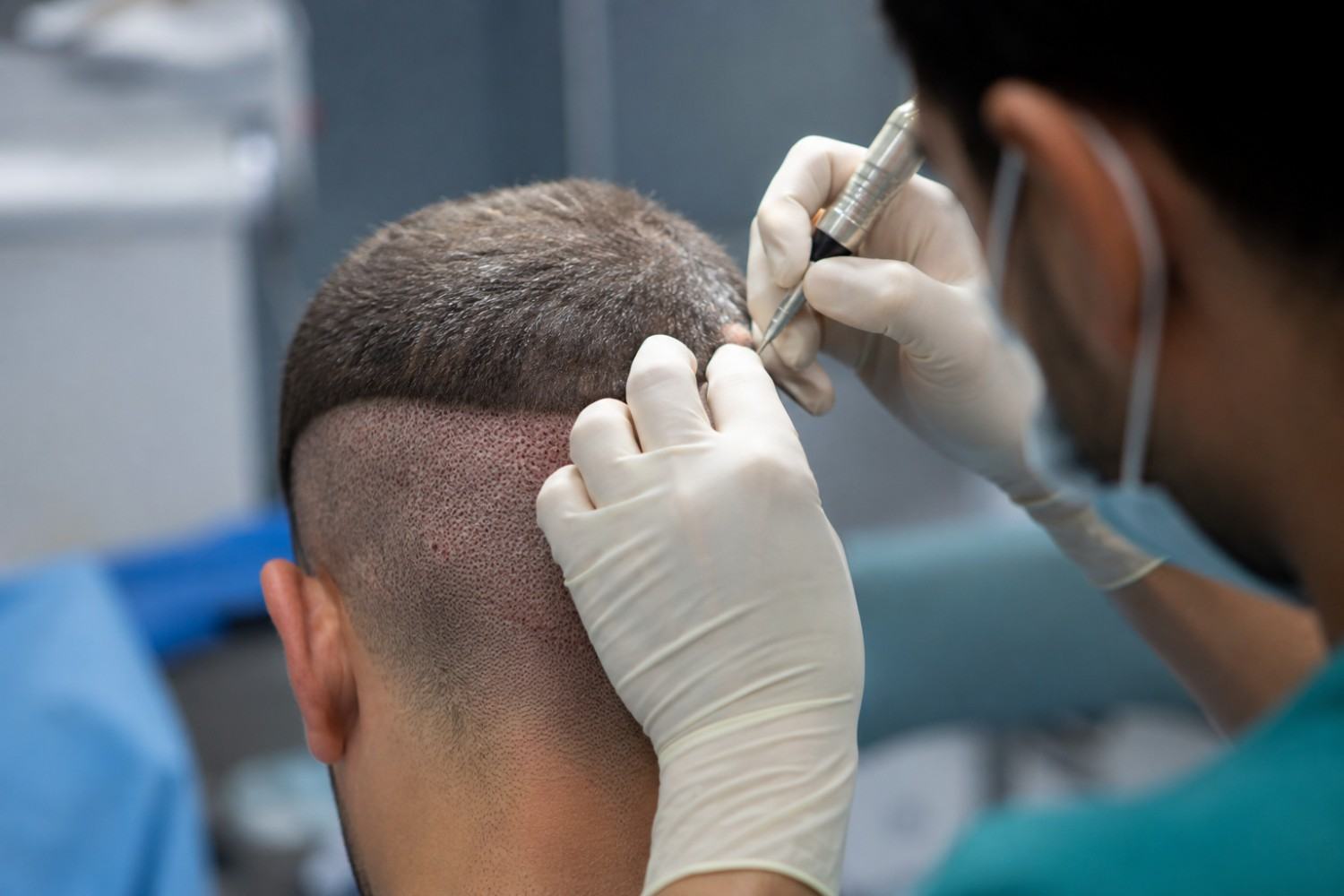
Follicular Unit Extraction using minimally invasive FUE procedures avoids a linear strip scar by removing individual follicles with micro-punches, which can leave tiny dot-like marks in the donor area. This approach allows follicles to be harvested without a large incision and may make scarring less noticeable, although healing and results vary between patients.
Hair Transplant Florida offers FUE as a hair restoration option for patients who want individual follicle extraction without a large incision. The clinic also uses FUE technologies designed to support careful follicle harvesting while reducing the risk of damage to healthy follicular units.
How Does FUE Help Reduce Visible Scarring?
Removing Follicles One at a Time
FUE removes hair roots one at a time from the donor area. Doctors use a small tool to take out each root with care. Minimally invasive FUE procedures use this method without cutting out a long strip of skin. This can help keep the wounds small.
Small Marks Instead of a Long Scar
FUE leaves many tiny spots where doctors remove the hair roots. These spots are much smaller than the long scar that FUT can leave. A FUE hair transplant in Florida may suit people who want to avoid a long line across the donor area.
How the Small Marks Heal
The tiny spots start to close as the scalp heals. Small crusts may form at first, but these often fall away as healing moves forward. FUE with minimal scarring can leave small dot-like marks after the skin heals. Hair around these spots may also help cover them.
Why Scars Can Look Different
Scar size and color can vary from person to person. Skin type, hair length, hair thickness, healing, and the number of follicles removed can affect how scars look. A FUT hair transplant in Florida uses a different method, so it usually creates a linear scar rather than many small dots.
What Makes FUE Minimally Invasive?
Individual Follicle Extraction
FUE removes each hair root on its own instead of cutting out a long strip of skin. This method keeps the treatment area small and limits the need for large cuts. Minimally invasive FUE procedures use this careful process to move healthy hair roots from one area to another.
Small Extraction Points
Doctors use small tools called micro-punches to remove each hair root. These tools make tiny round openings in the scalp, which can close as the skin heals. FUE with minimal scarring can leave small dot-like marks instead of one large scar.
No Linear Strip Scar
FUE does not require doctors to remove a long strip of skin from the back of the scalp. FUT uses a strip method, so it can leave a straight scar where the skin was removed. Minimally invasive FUE procedures avoid this long cut, which is a key difference between FUE and FUT.
What Does FUE Scarring Look Like?
Tiny Dot-Like Scars
FUE can leave tiny round marks where the doctor removes each hair root. These marks may look like small white or light dots once the skin heals. Minimally invasive FUE procedures make small wounds, but they do not make the scalp fully scar-free.
Hair Can Hide the Marks
Hair around the donor area can help cover the small marks after the scalp heals. The marks may be hard to see when enough hair grows around them. FUE with minimal scarring may help make these spots less easy to notice, but results can vary for each person.
Scars With Short Hair
Very short hair can make small FUE scars easier to see because less hair covers the donor area. Scar size, skin tone, hair color, and healing can also affect how the marks look. Keeping some hair over the area may help hide the small spots.
What Are the Benefits of FUE With Minimal Scarring?
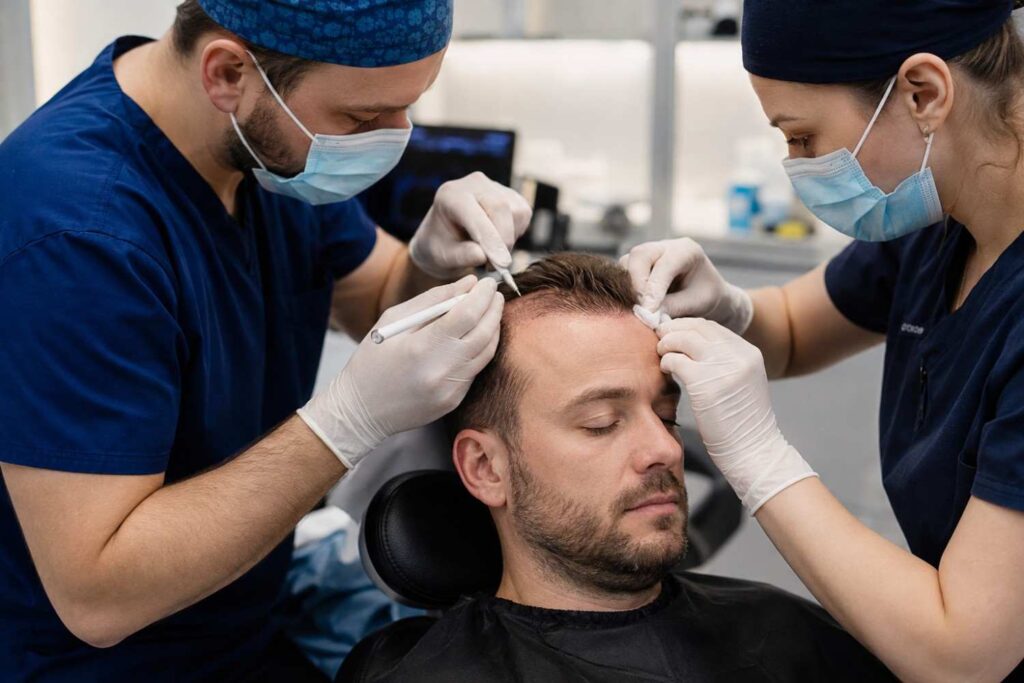
No Linear Scar
FUE removes hair roots one at a time instead of cutting out a strip of skin. Minimally invasive FUE procedures can avoid the long, straight scar linked with the strip method. This may help the donor area look more natural after it heals.
Shorter Hairstyle Options
FUE with minimal scarring may give patients more choices when they want to wear shorter hair. Small dot-like scars can be harder to see than one long scar. Still, very short hair may make some small marks easier to notice.
Smaller Treatment Wounds
FUE uses small tools to remove each hair root from the donor area. Minimally invasive FUE procedures create tiny openings instead of one long cut. These small wounds close as the scalp heals, although healing time can differ for each person.
Less Noticeable Donor-Area Scarring
FUE spreads small extraction points across the donor area instead of leaving one long line. Hair around these spots can also help hide them as it grows. Scar size and how easy scars are to see can still vary based on the skin, hair, and healing process.
How Long Does the Donor Area Take to Heal?
Early Healing
The donor area starts to heal soon after FUE. Minimally invasive FUE procedures create many small points where the doctor removes hair roots. These spots start to close as the skin heals. Early healing often takes several days, but each person may heal at a different speed.
Redness and Small Crusts
The donor area may look red and feel sore at first. Small crusts may also form over the extraction points. These signs are often part of the healing process, and they tend to fade as the scalp gets better.
Changes in Extraction Points
The small extraction points become less clear as the skin heals. Crusts fall away, redness fades, and the tiny wounds close. Hair growth around the area can also help cover the marks. Healing speed can vary based on the skin and aftercare.
Final Scar Appearance
Early healing does not show how the scars will look in the end. The skin can keep changing after the small wounds close. Tiny dot-like scars may become less easy to see over time, but FUE does not promise a scar-free result.
How Does FUE Scarring Compare With FUT?
FUE and FUT both move healthy hair from a donor area to areas with hair loss. However, each method removes hair in a different way. This difference also affects the type of scar a person may have.
- Extraction method: FUE removes hair roots one at a time with a small punch tool. Minimally invasive FUE procedures do not require the doctor to remove a long strip of skin. FUT removes a strip of skin that contains many hair roots.
- Linear scar: FUT can leave one thin, straight scar in the donor area. FUE does not create this type of long scar because it removes each hair root on its own.
- Dot scars: FUE can leave many tiny, round scars where the doctor removes the hair roots. These marks may become hard to see after healing. Scalp micropigmentation (SMP) may be an option for some people who want to improve the look of visible scalp areas or scars.
- Incision type: FUT needs a longer cut so the doctor can remove a strip of skin. FUE uses many small openings instead. Both methods can leave scars because both affect the skin.
- Short hairstyles: FUE may work better for people who like short hair because it does not leave one long scar. Still, very short hair can make small FUE dots easier to see.
- Healing considerations: FUE leaves many small spots that need time to heal. FUT has a longer wound that also needs time to heal. Healing time and scar appearance can differ from person to person.
Who May Consider Minimally Invasive FUE Procedures?
Concerns About Scarring
Some patients want to avoid the long, straight scar linked with the strip method. Minimally invasive FUE procedures remove hair roots one at a time, so they leave small dot-like marks instead. This may suit patients who worry about a linear scar.
Preference for Short Hair
Short hairstyles may work well with FUE because the method does not leave one long scar. Small marks can still show with very short cuts. Patients with male pattern baldness may consider FUE if they have enough healthy donor hair.
Suitable Donor Hair
A good donor area needs enough healthy hair roots for the planned treatment. Hair thickness, density, and the size of the treatment area can affect the plan. Hair loss in women can follow different patterns, so a careful check can help guide treatment.
Individual Hair Extraction
FUE may suit patients who prefer a method that removes each hair root on its own. The doctor uses a small tool to remove selected roots from the donor area. This process avoids removing a long strip of scalp.
Professional Assessment
FUE is not right for every patient with hair loss. A professional can check the type of hair loss, donor hair, scalp health, and treatment goals. This check helps set clear goals and find a treatment that fits each patient’s needs.
What Should You Ask a Clinic About FUE Scarring?
Extraction Method
Ask how the clinic removes hair roots from the donor area. Minimally invasive FUE procedures remove each root through a small opening instead of a long cut. Knowing the method can help you understand what type of scars may form.
Punch Size
Ask about the size of the punch tool used during FUE. A smaller tool makes small openings around each hair root. Punch size can affect the size of the marks, but skin and healing also play a role.
Donor-Area Planning
Ask how the clinic plans where to remove hair roots. Good planning spreads the extraction points across the donor area. This can help keep enough hair between the small marks and support a more even look.
Expected Scar Pattern
Ask what the scars may look like after the scalp heals. FUE often leaves small dot-like marks instead of one long scar. The final look can vary based on your skin, hair, and the number of roots removed.
Recovery
Ask how long the early healing stage may take. You can also ask when redness, crusts, and soreness may start to fade. Hair restoration cost can also be discussed during your visit so you understand the treatment plan and related fees.
Aftercare
Ask how to care for the donor area after FUE. The clinic should explain how to wash and protect the scalp during healing. Following the care plan can help the small wounds heal as expected.
Similar Cases
Ask about the clinic’s experience with patients who have similar hair and treatment needs. This can help you learn how the clinic plans FUE for different donor areas, hair types, and levels of hair loss.
Before-and-After Photos
Ask to see before-and-after photos from similar FUE cases. Look closely at the donor area as well as the treated area. These photos can help you see how scars may look after healing.
Ready to Explore FUE With Less Scarring?
Hair Transplant Florida can help you learn if minimally invasive FUE procedures may fit your hair goals. Our hair transplant virtual consults make it easy to discuss your hair loss, donor area, and treatment options. Contact us to learn more and plan your next step.
FAQs
Does FUE leave scars?
Yes. FUE can leave tiny dot-like scars where the doctor removes hair roots. These marks may become less easy to see after healing, but FUE is not scar-free.
How long do FUE scars take to heal?
The small extraction points start healing within the first few days. Redness, crusts, and soreness often improve as the scalp heals. Final scar appearance can take longer.
Are FUE scars easy to see?
FUE scars are often small and round. Hair around the donor area can help hide them. Scar visibility depends on hair length, skin, healing, and the number of follicles removed.
Can I wear short hair after FUE?
Yes, many patients can wear shorter hairstyles after FUE. However, very short hair may make small dot-like scars easier to see in the donor area.
Is FUE better than FUT for scarring?
FUE and FUT create different types of scars. FUE usually leaves small dot-like scars, while FUT can leave a linear scar. The best method depends on your needs and donor area.